
Parece que estás en los Estados Unidos.
Tenemos un sitio diferente (www.q-bital.com) que se adapta mejor a su ubicación
Los proveedores de atención médica en todo el Reino Unido se enfrentan a un desafío sin precedentes: ampliar su capacidad rápidamente, manteniendo al mismo tiempo entornos seguros y de alta calidad para pacientes y personal. Los métodos de construcción tradicionales, a menudo lentos, complejos y que generan interrupciones, resultan cada vez más incapaces de satisfacer las demandas de los sistemas de salud actuales.
Como persona que trabaja a diario con los fideicomisos y juntas de salud del NHS, veo la necesidad urgente de soluciones inmobiliarias más rápidas, predecibles y que aporten valor a largo plazo. La construcción modular volumétrica, y en concreto los proyectos de alto valor prefabricado (PMV), responden a esa necesidad.
La construcción volumétrica, o construcción modular, es el proceso de fabricar módulos en una fábrica externa, transportarlos al lugar de la obra y luego unirlos para construir un edificio.
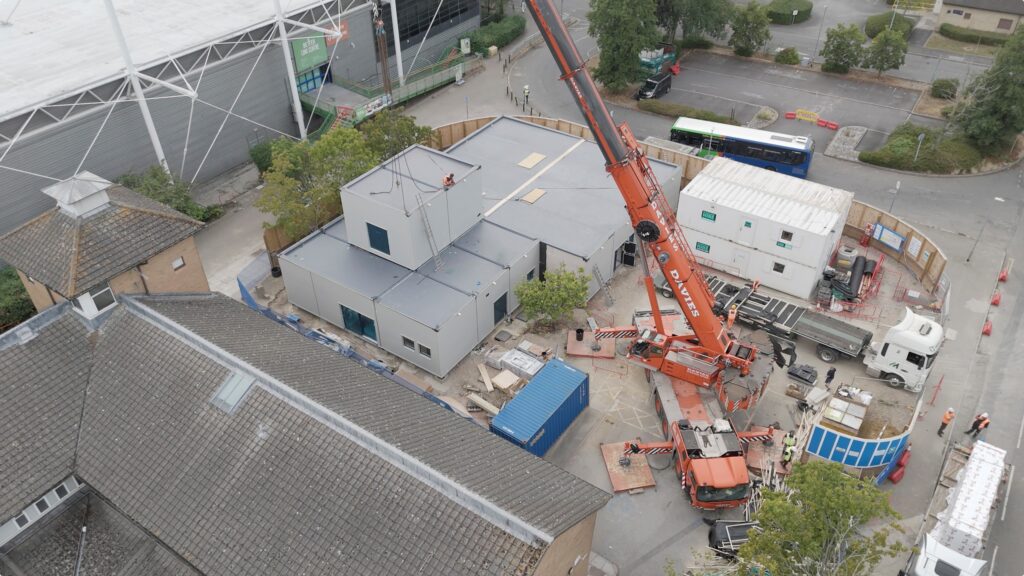
Instalación de un centro de diagnóstico en el corazón de la comunidad.
Existen diversos tipos de construcción volumétrica. Vanguard, en nuestra fábrica de Hull, utiliza técnicas de construcción modular para crear espacios clínicos de alta calidad, destinados exclusivamente al sector sanitario. Estos incluyen quirófanos, salas de hospitalización, clínicas, centros de urgencias, unidades centrales de esterilización, salas de endoscopia, salas de descontaminación, centros quirúrgicos y centros de diagnóstico comunitario, todos ellos líderes en el sector.
Los hospitales deben encontrar la manera de aumentar su capacidad sin comprometer la seguridad ni la continuidad del servicio, y para muchos fideicomisos y juntas de salud del NHS, esto crea un difícil equilibrio: deben construir más espacio, mucho más rápido que nunca, en un momento en que los métodos de construcción tradicionales tienen dificultades para seguir el ritmo de las exigencias operativas y normativas.
Es una realidad que los responsables de la gestión y el desarrollo de las instalaciones sanitarias sienten con mucha intensidad.
Los proyectos no solo deben avanzar con rapidez, sino también ofrecer resultados predecibles, minimizar las interrupciones y cumplir con estándares cada vez más estrictos en materia de prevención de infecciones, eficiencia energética, seguridad contra incendios, calidad acústica y sostenibilidad. En este contexto, la construcción modular volumétrica, especialmente con componentes prefabricados de alto valor, ha comenzado a transformar la manera en que el NHS (Servicio Nacional de Salud del Reino Unido) concibe la expansión de sus instalaciones.
Por supuesto, para quienes trabajan en la construcción de instalaciones sanitarias, el concepto de construcción modular no es nuevo. Lo que sí es diferente ahora es el nivel de precisión, sofisticación y preparación clínica que ofrecen las soluciones volumétricas de alto PMV. Cuando se fabrican más de 80% de un edificio fuera de obra, los beneficios para las instalaciones del NHS se vuelven tangibles, cuantificables y directamente vinculados a la continuidad operativa. La promesa de una construcción más rápida suele ser el principal atractivo, ya que los trabajos de cimentación en obra se realizan simultáneamente con la construcción de los módulos en la fábrica, y las ventajas van mucho más allá de la mera duración del programa.
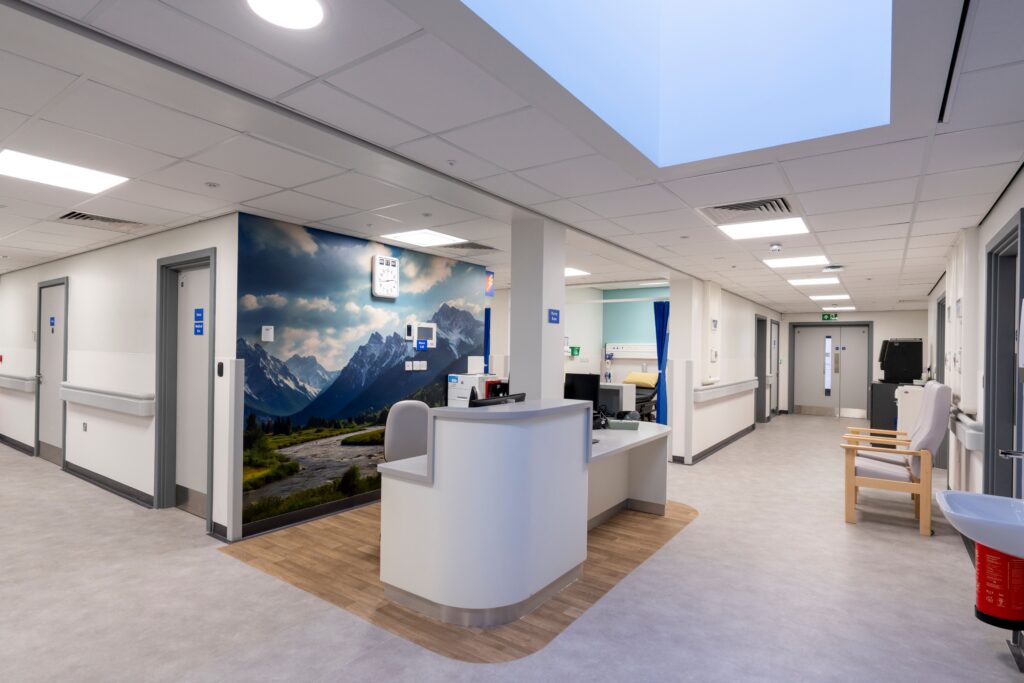
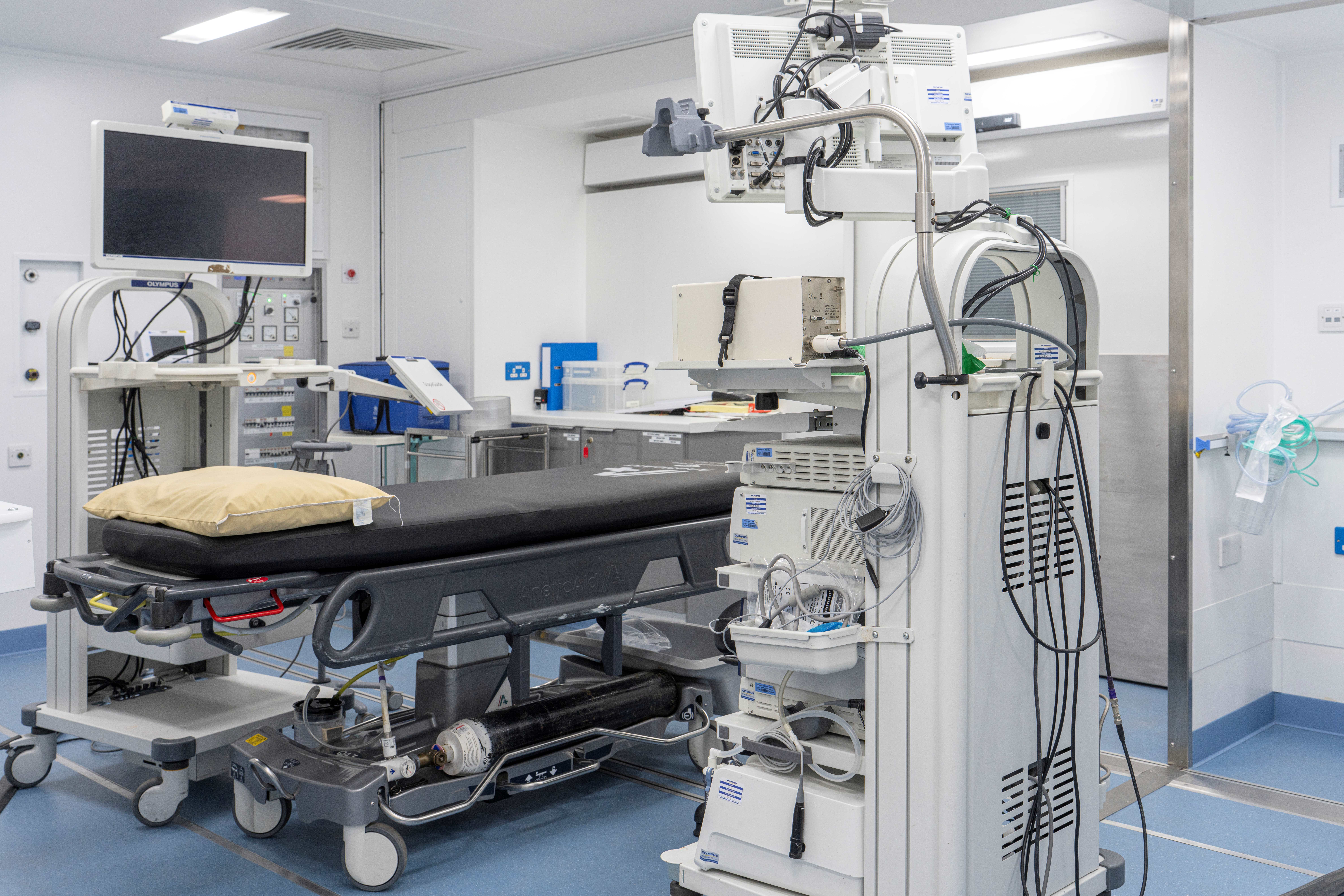
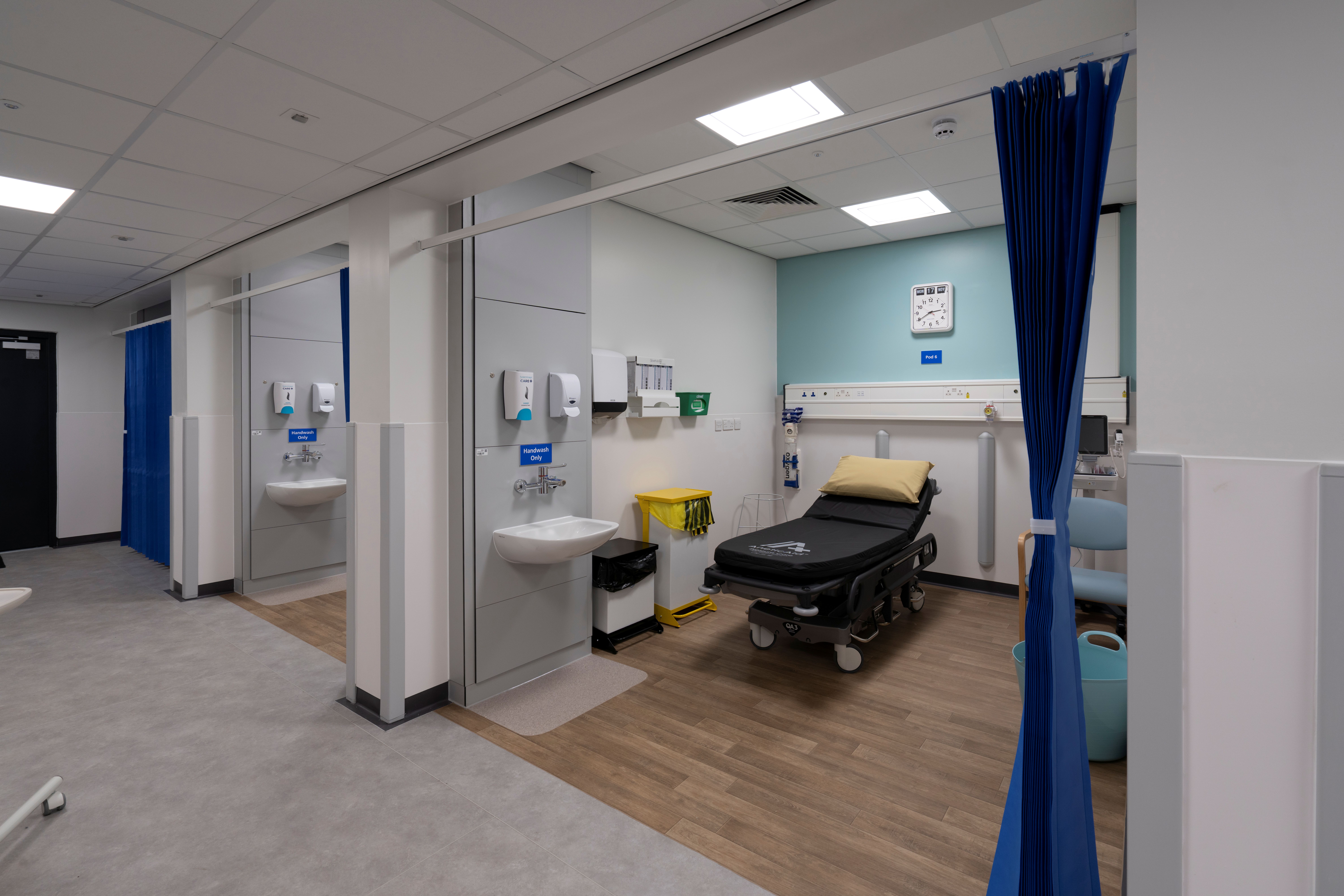
Base de enfermería en el CDC modular
En Vanguard, nuestra experiencia como creadores de soluciones especializadas para el sector sanitario nos ha demostrado el gran potencial transformador de estos métodos modernos. La construcción volumétrica ofrece una gran oportunidad para los proveedores de atención médica que buscan aumentar su capacidad clínica con mínimas interrupciones.
Un proyecto reciente llevó al equipo Vanguard a diseñar, construir y entregar un Centro de Diagnóstico Comunitario modular en Swindon, en nombre de Great Western Hospitals NHS Foundation Trust. Utilizando métodos de construcción modernos, construimos un centro que incluye dos salas de tratamiento de endoscopia y seis cabinas para pacientes para antes y después del tratamiento. Otras instalaciones incluyen una zona de recepción y administración, sala de espera, sala de admisión, dos consultorios, puesto de enfermería, almacenes, cuartos de servicio y almacén de endoscopios, así como salas de descanso para el personal y cocina. Con una previsión de 6000 pacientes en 12 meses, el impacto potencial de la unidad era evidente.
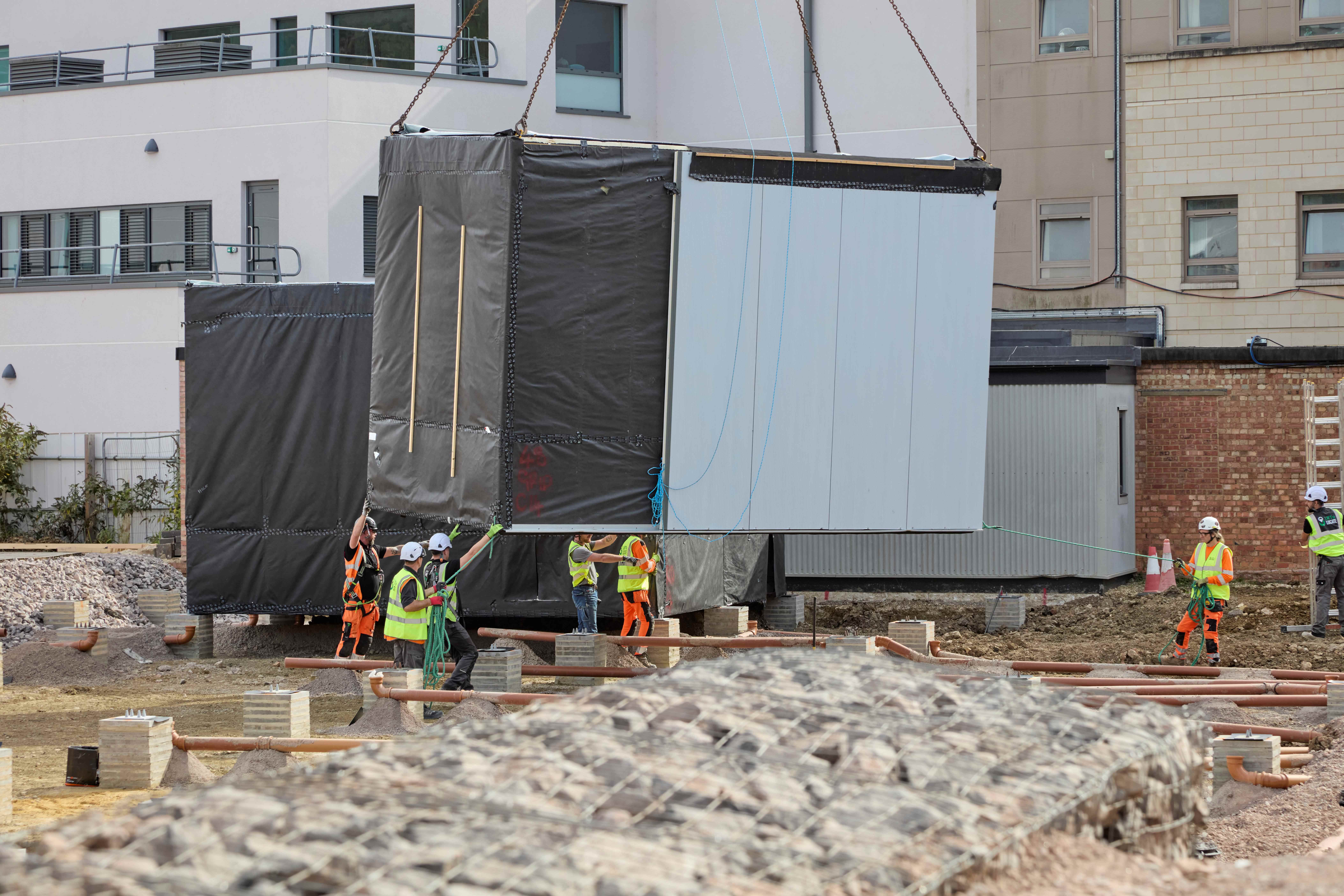
Fundamentalmente, cuanto mayor sea el PMV, menor será el trabajo necesario en obra. Los módulos prefabricados se entregaron e instalaron en dos días, minimizando las molestias causadas por el ruido, el polvo y el tráfico. El nuevo centro ya atiende a pacientes de la zona, cumple con los estándares de acreditación para servicios de endoscopia del Grupo Asesor Conjunto sobre Endoscopia Gastrointestinal (JAG) y contribuye al logro de los objetivos nacionales del NHS.
La rapidez con la que se pudo ejecutar el proyecto, al tratarse de un proyecto de alto volumen de pacientes por paciente, significó que los pacientes pudieran ser atendidos para sus procedimientos esenciales lo antes posible.
No es ningún secreto que los hospitales actuales no pueden afrontar largos programas de construcción. Se necesitan centros quirúrgicos, centros de diagnóstico comunitarios y departamentos de esterilización ahora, no dentro de unos años. La capacidad para realizar pruebas de imagen, diagnósticos y procedimientos electivos debe ampliarse de inmediato si se quieren alcanzar los objetivos de recuperación nacional.
Al fabricar los módulos fuera de la obra mientras se realizan los trabajos de cimentación en el sitio, los proyectos de alto volumen de producción pueden reducir los plazos de entrega hasta en un 401% en comparación con la construcción tradicional. Los módulos llegan completamente ensamblados, probados y listos para su instalación, lo que reduce el tiempo en obra de meses a semanas.
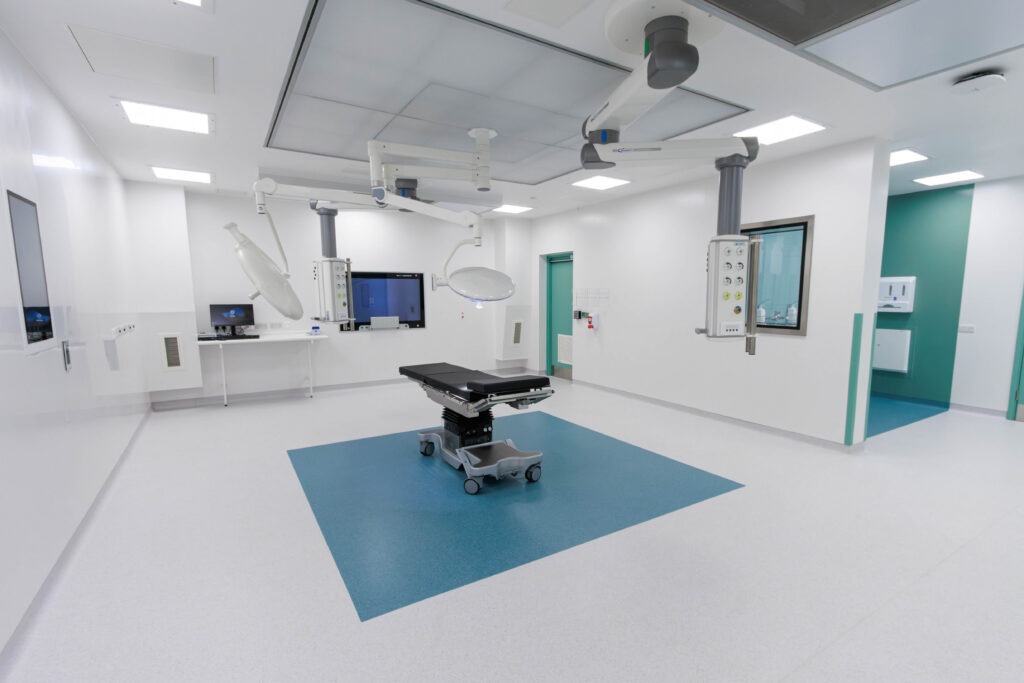
Quirófano modular
Este flujo de trabajo paralelo ofrece algo que, según nos comentan los profesionales sanitarios, es su necesidad más urgente: certeza. Certeza en el programa, que permite planificar la atención clínica y la plantilla con confianza. Certeza en los costes, gracias a un proceso de fabricación más controlado y predecible. Y certeza en la calidad, posible porque dentro de la fábrica el entorno de producción se controla con mayor facilidad, lo que facilita la uniformidad y una gestión rigurosa.
Los profesionales de mantenimiento de instalaciones del NHS comprenden mejor que nadie la sensibilidad de los entornos hospitalarios. Las obras importantes que se realizan dentro o cerca de las áreas clínicas conllevan riesgos que van más allá de la logística de la construcción. Pueden afectar al control de infecciones, la calidad del aire, la accesibilidad, la planificación de emergencias y la experiencia diaria de pacientes, visitantes y personal. Y cualquier ampliación hospitalaria a gran escala debe respetar las necesidades de pacientes, visitantes y personal.
Con menos ruido, menos movimiento de vehículos, mejor control del polvo y la calidad del aire, y una superficie menor que los contratistas necesitan para equipos y materiales, la construcción modular favorece la resiliencia operativa que los equipos de gestión de instalaciones sanitarias se esfuerzan incansablemente por preservar. Para un proveedor de atención médica que trabaja para mantener los servicios en funcionamiento durante una remodelación, estas no son ventajas menores, sino esenciales.
Los entornos sanitarios exigen niveles excepcionales de calidad y cumplimiento normativo, así como una precisión extraordinaria. Es fundamental verificar la tasa de renovación del aire. El aislamiento acústico debe proteger la confidencialidad y favorecer la recuperación. Las interfaces estructurales con los edificios existentes deben ser fiables. Los marcos normativos en los espacios clínicos son estrictos.
Cumplir con estos requisitos en una obra de construcción tradicional puede resultar complicado debido a que las condiciones varían, los recursos fluctúan y los efectos del clima y la secuencia de las tareas pueden generar inconsistencias.
En una fábrica, sin embargo, cada módulo se construye bajo condiciones controladas y repetibles. Las instalaciones volumétricas de Vanguard operan con tolerancias de más o menos dos milímetros, lo que permite diseñar y probar las interfaces entre módulos, cimientos y edificios adyacentes con un grado de precisión inusual, incluso en la construcción de instalaciones sanitarias. El resultado es un nivel de control de calidad que mejora el cumplimiento de las normativas, reduce la necesidad de retrabajo y disminuye el coste total del ciclo de vida.
En pocas palabras, en un entorno de fábrica, la calidad se puede controlar hasta un punto que simplemente no se puede alcanzar en una obra de construcción tradicional, lo que garantiza una integración perfecta con los cimientos, los edificios existentes y los servicios esenciales.
Las condiciones de la fábrica también mejoran el desempeño en materia de seguridad. Al completarse hasta el 90% del trabajo fuera de las instalaciones, se reduce considerablemente la necesidad de que los operarios trabajen en altura, en pasillos clínicos estrechos o cerca de infraestructuras hospitalarias en funcionamiento. El entorno controlado de la fábrica reduce los riesgos relacionados con las condiciones climáticas, la manipulación manual de cargas y el trabajo de diversos oficios en las instalaciones. Para los equipos de mantenimiento del NHS, responsables de garantizar la continuidad segura de las operaciones clínicas durante la construcción, estas mejoras en la seguridad y la salud laboral son fundamentales.
La sostenibilidad ya no es una consideración opcional: el desempeño ambiental y los compromisos de cero emisiones netas se encuentran ahora en el centro de toda estrategia a largo plazo para las instalaciones del NHS (Servicio Nacional de Salud del Reino Unido).
La construcción volumétrica contribuye significativamente a alcanzar esos objetivos. Los edificios fabricados con este método demuestran sistemáticamente una mayor estanqueidad y un mejor rendimiento térmico, lo que reduce la energía necesaria para la calefacción y la refrigeración. La construcción en fábrica permite una gestión más rigurosa de los materiales, lo que se traduce en hasta un 90 % menos de residuos cuando la participación en el diseño comienza en las primeras etapas.
La reducción del tráfico asociada al programa de construcción modular a gran escala contribuye a disminuir las emisiones locales, reduciendo así el impacto ambiental en los hospitales y sus comunidades. Para los equipos de gestión de instalaciones que buscan ampliar su presencia a la vez que apoyan los objetivos de reducción de carbono de la organización, estas ventajas ambientales constituyen un argumento convincente a favor de la construcción modular. Ofrecen pasos prácticos y alcanzables para ayudar al NHS a lograr sus objetivos de cero emisiones netas mientras adapta sus instalaciones.
Uno de los ejemplos recientes más llamativos de construcción de instalaciones sanitarias de alto valor añadido es el centro de esterilización central Vanguard desarrollado para los hospitales universitarios de Estrasburgo.
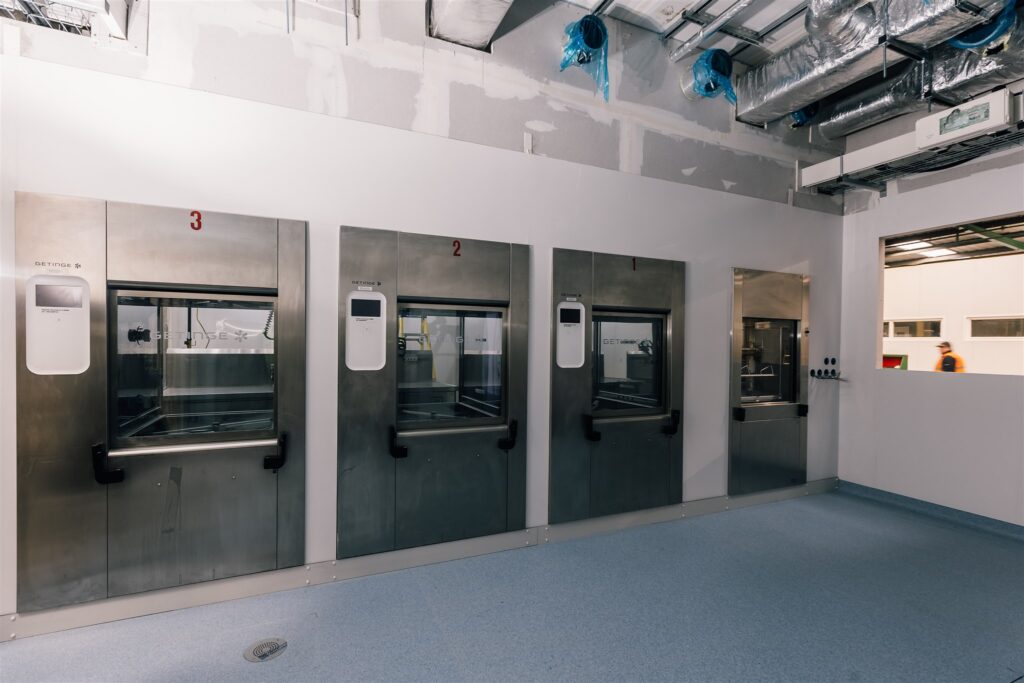
Módulo CSSD, equipado antes de su entrega en obra.
Fabricado íntegramente en nuestra fábrica de Hull, el edificio llegó a Francia con cuatro lavadoras, tres esterilizadores de vapor, un esterilizador de peróxido de hidrógeno a baja temperatura, vestuarios, zona de descanso para el personal, esclusa, espacio de oficinas y almacén, todo ello ya instalado.
Con su central de esterilización (CSSD) en proceso de renovación, el hospital necesitaba una instalación alternativa totalmente operativa que pudiera desplegarse de forma rápida y segura. Un enfoque modular de alto volumen de producción (PMV) lo hizo posible. El edificio llegó a Francia listo para su rápido montaje, pruebas y puesta en marcha. Este tipo de despliegue demuestra la madurez alcanzada por la construcción volumétrica y su perfecta adaptación a las realidades operativas a las que se enfrentan los proveedores de atención médica, no solo en el NHS, sino también a nivel internacional.
La construcción volumétrica funciona mejor cuando arquitectos, planificadores, profesionales clínicos y socios constructores colaboran desde el principio. La participación temprana permite estandarizar los diseños, reducir los residuos, acelerar la fabricación, mejorar el cumplimiento normativo y obtener una mayor certeza en los costes. Los proveedores de atención médica que incorporan a socios especializados en construcción modular desde el inicio obtienen los mayores beneficios en cuanto a plazos, presupuesto y rendimiento operativo.
Ante la creciente demanda de servicios sanitarios, los métodos de construcción modernos ofrecen una solución escalable, predecible y de alta calidad. La construcción volumétrica no es simplemente una alternativa a la edificación tradicional; en muchos casos, es una mejor opción: más rápida, segura, sostenible y adaptada a las realidades operativas de la atención sanitaria moderna.
En Vanguard, creemos que las instalaciones modulares de alto PMV desempeñarán un papel fundamental en la forma en que el NHS se expanda de manera sostenible y estratégica en los próximos años.
Para los equipos de gestión inmobiliaria que estén considerando si este enfoque es el adecuado para su próximo proyecto, comprender cómo funciona la construcción volumétrica en la práctica es fundamental. A diferencia de las construcciones tradicionales, donde la construcción y el diseño suelen avanzar simultáneamente bajo condiciones cambiantes del terreno, los edificios modulares se benefician significativamente de la colaboración temprana entre arquitectos, equipos de diseño, planificadores, profesionales sanitarios y socios de fabricación modular.
La participación temprana permite estandarizar los diseños cuando sea apropiado, minimizar los residuos y optimizar los procesos de fabricación. Las estrategias inmobiliarias que incorporan un enfoque modular desde el principio suelen obtener los mayores beneficios en cuanto a rapidez de entrega y control de costes.
El proceso suele comenzar con la identificación, adquisición o evaluación del terreno. Dado que no hay dos instalaciones del NHS iguales (algunos hospitales cuentan con áreas bien definidas donde se pueden ampliar o instalar infraestructuras temporales, mientras que para otros resulta más difícil),.
También depende de la función que se le asigne al centro y de los procedimientos que se realicen. Puede que deba estar cerca de otras salas, quirófanos o instalaciones específicas, y que el flujo de pacientes sea un factor importante. Otros centros pueden funcionar como soluciones independientes, ubicados lejos del edificio principal del hospital.
Cuando colaboramos con un proveedor de atención médica, nuestro enfoque incluye evaluaciones iniciales conjuntas que consideran los servicios públicos, el acceso, la relación con los servicios existentes y el impacto en pacientes y personal. Estas consideraciones iniciales constituyen la base del trabajo de diseño posterior. A continuación, se procede al diseño y la planificación, basándose en estudios de viabilidad que estiman la cantidad de módulos necesarios y su configuración.
Dado que la construcción volumétrica requiere un alto nivel de precisión, la participación temprana es fundamental. Los equipos de diseño deben desarrollar configuraciones que satisfagan las necesidades clínicas, operativas y técnicas de todas las partes interesadas, y que además faciliten una fabricación eficiente.
La estandarización es fundamental en esta etapa. Garantiza que los módulos se puedan producir de forma consistente, con interfaces predecibles para los cimientos, los núcleos centrales y los edificios existentes. El cumplimiento de la normativa contra incendios, las cargas estructurales, el rendimiento térmico, la permeabilidad al aire, la ventilación mecánica, el diseño de la fachada y la integración de los servicios se definen con antelación para reducir la probabilidad de cambios posteriores. Para los equipos de gestión de propiedades del NHS, esto reduce el riesgo y facilita una comunicación más clara con las autoridades de planificación, los responsables clínicos y los comités de programas de inversión.
La fabricación comienza entonces en un entorno de fábrica donde los procesos de control de calidad están profundamente arraigados. El objetivo es que en esta etapa se complete aproximadamente entre el 80 y el 90 por ciento de la construcción, incluyendo el montaje estructural, las particiones internas, las instalaciones electromecánicas, el acondicionamiento clínico, los accesorios y sistemas especializados como gases medicinales o sistemas de ventilación.
Gracias a líneas de producción estandarizadas y procedimientos operativos claramente definidos, el entorno de la fábrica favorece la mejora continua, el uso eficiente de los materiales y una producción constante. Esto contrasta con las obras de construcción tradicionales, donde las condiciones climáticas, la disponibilidad de subcontratistas y las limitaciones de secuencia pueden generar variabilidad. Para los equipos de gestión de instalaciones responsables del cumplimiento normativo clínico, la previsibilidad de la fabricación en fábrica supone una ventaja significativa.
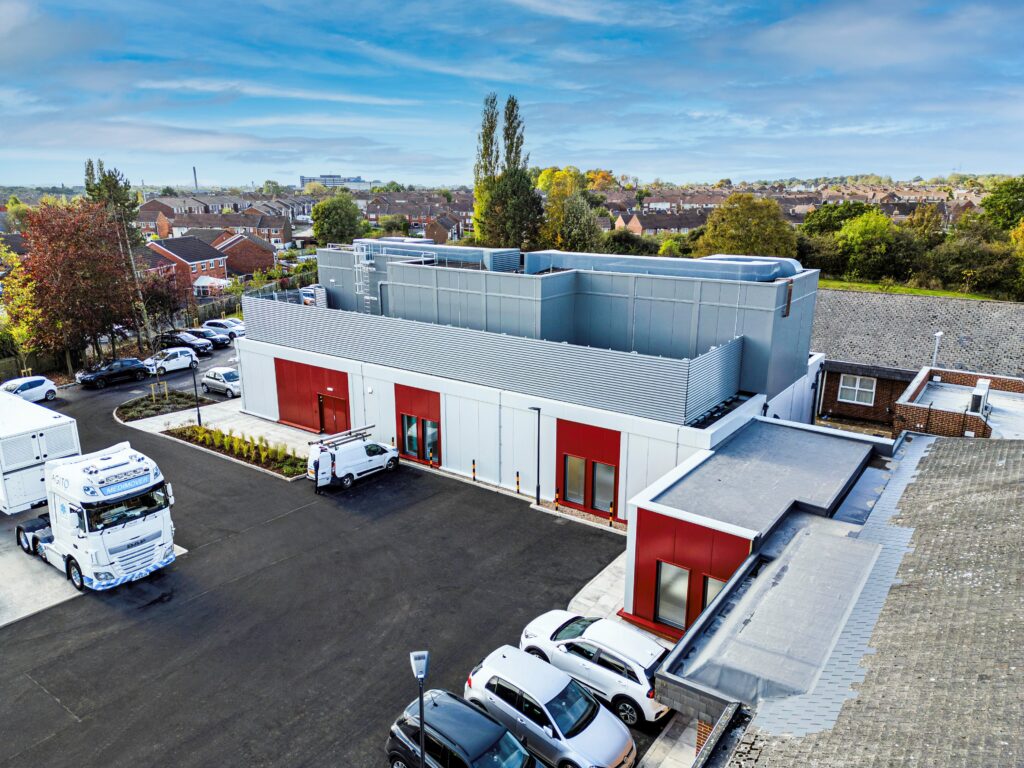
Instalación quirúrgica modular con dos quirófanos
Mientras se lleva a cabo la fabricación de los módulos en la fábrica, también se presta especial atención a la logística de construcción en obra. La precisión es fundamental: los módulos construidos con una tolerancia de dos milímetros requieren cimientos e interfaces estructurales diseñados y ejecutados con una precisión comparable.
Se trata de un proceso complejo y laborioso, y la colaboración entre los fabricantes de módulos, los contratistas de cimentación y los equipos de mantenimiento de las instalaciones hospitalarias es fundamental para garantizar una instalación exitosa.
Hay mucho que considerar. Es necesario planificar las rutas de transporte, evaluar la capacidad de las grúas, definir las configuraciones de elevación y preparar las áreas de almacenamiento. Se deben verificar y probar los servicios públicos y las conexiones. Y es fundamental garantizar en todo momento la seguridad pública y la accesibilidad para los pacientes.
El marco jurídico para la construcción modular difiere de los modelos de contratación tradicionales, especialmente en lo que respecta a la propiedad y la transferencia de riesgos, que pueden producirse mientras los módulos aún se encuentran en la planta de fabricación.
Los procesos de control de calidad también requieren claridad contractual para garantizar que las inspecciones se puedan realizar dentro de la fábrica. En Vanguard animamos a nuestros clientes a visitar la fábrica de Hull durante la producción para evaluar el progreso de primera mano y verificar el cumplimiento de las normas, lo que brinda a los equipos de gestión de propiedades mayor visibilidad y seguridad durante todo el proceso de construcción.
Al evaluar la construcción volumétrica, surgen cuestiones prácticas. La seguridad contra incendios es primordial, y los edificios modulares se diseñan de acuerdo con toda la legislación vigente en materia de incendios, incorporando la resistencia al fuego tanto en los módulos individuales como en la estructura del edificio terminado.
Las preocupaciones relacionadas con la transferencia acústica y térmica se solucionan mediante el diseño de módulos que solo se apoyan en sus esquinas, lo que limita el contacto entre unidades contiguas y mejora el rendimiento.
Algunos equipos preguntan si los accesorios y acabados se pueden personalizar; la respuesta es sí. Los módulos se diseñan en colaboración con los equipos clínicos para garantizar que los espacios terminados satisfagan las necesidades operativas.
Otros preguntan si los edificios modulares se asientan después de la instalación. No, porque el material estructural principal es acero laminado en caliente que mantiene su integridad durante toda la vida útil del edificio.
Otra cuestión, a menudo decisiva, se refiere a la velocidad. ¿Con qué rapidez puede estar un edificio modular en obra y operativo? Un conjunto de 100 módulos prefabricados puede ensamblarse en cuestión de semanas, no de meses, lo que ofrece a los responsables de fincas una vía rápida para aumentar la capacidad con un riesgo mínimo.
A medida que el NHS busca expandirse de forma sostenible, mejorar el flujo de pacientes y modernizar la infraestructura obsoleta, la construcción modular volumétrica de alto PMV ofrece una manera de llevar a cabo mejoras en las instalaciones al ritmo que exigen actualmente los servicios clínicos.
Reduce las interrupciones, mejora la calidad, aumenta la seguridad, acelera la entrega y disminuye el impacto ambiental, al tiempo que garantiza el cumplimiento de los rigurosos estándares exigidos a los edificios sanitarios. Si bien los métodos de construcción modernos suelen describirse como una alternativa a la construcción tradicional, para muchas aplicaciones sanitarias no son simplemente una alternativa, sino un enfoque superior y más acorde. Respaldan la necesidad del NHS de resiliencia y flexibilidad, a la vez que proporcionan instalaciones que cumplen con los requisitos técnicos y clínicos de la medicina moderna.
Para los equipos de gestión inmobiliaria que trabajan en un entorno de creciente demanda, complejas presiones regulatorias y tiempo de inactividad limitado para grandes proyectos de remodelación, la construcción volumétrica representa un cambio fundamental en lo que es posible.
Como demuestran proyectos en todo el Reino Unido e internacionalmente, los edificios modulares de alta eficiencia ya ofrecen la certeza, la calidad y la rapidez que los proveedores de atención médica necesitan con urgencia. En los próximos años, a medida que aumente la presión sobre la capacidad clínica, este enfoque desempeñará un papel cada vez más importante para que el NHS pueda expandirse de forma segura, sostenible y estratégica, garantizando que los pacientes se beneficien de instalaciones clínicas modernas, desarrolladas con la rapidez y precisión que exige la atención médica.
Este artículo apareció originalmente en la revista Health Estate Journal: HEJ mayo de 2026 :: 52
Soluciones para el cuidado de la salud Vanguard
Unidad 1144 Regent Court, The Square, Gloucester Business Park, Gloucester, GL3 4AD

Tenemos un sitio diferente (www.q-bital.com) que se adapta mejor a su ubicación