
Parece que você está nos Estados Unidos
Temos um site diferente (www.q-bital.com) que melhor se adapta à sua localização
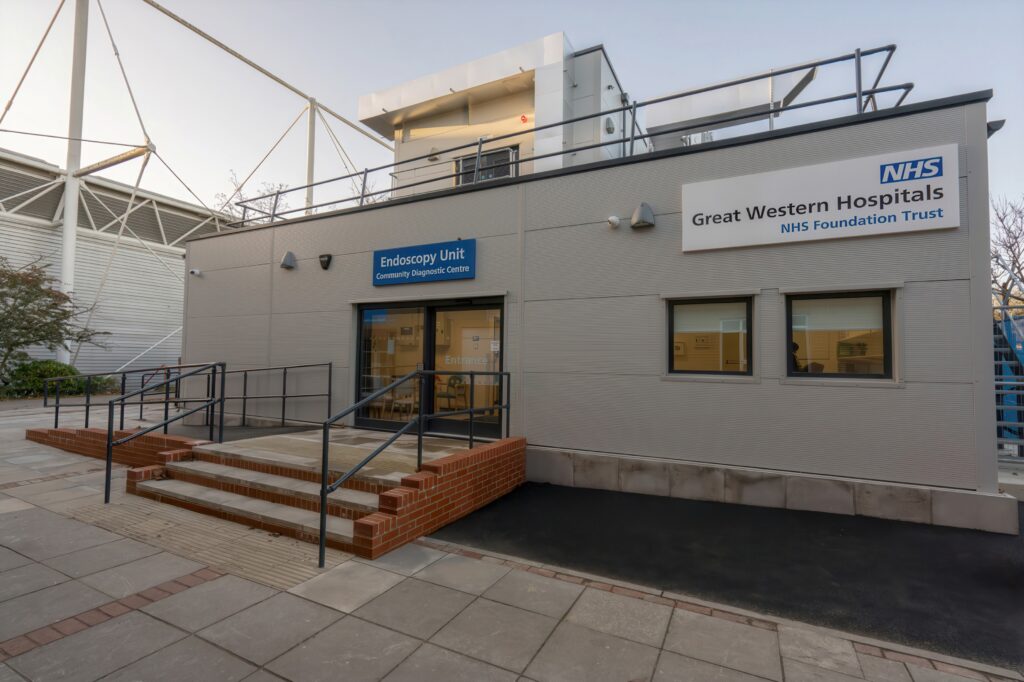
Could a different route to upper gastrointestinal endoscopy offer a potentially better-tolerated option for some patients, while bringing more diagnostic care closer to home?
Transnasal endoscopy (TNE) raises that question for community diagnostic centres (CDCs) and the teams planning them. It also invites a wider conversation about how services and the spaces around them can support more choice.
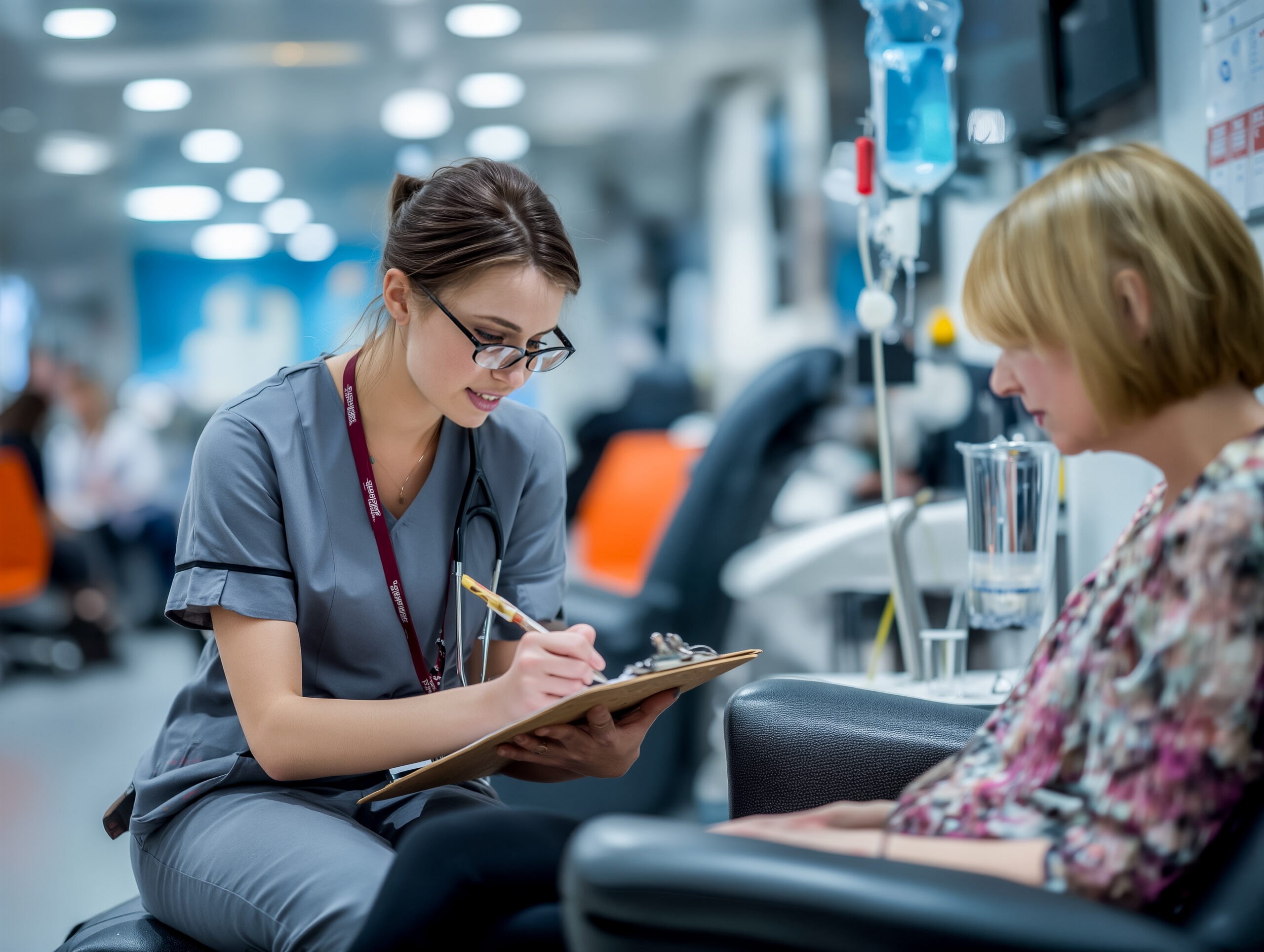
TNE uses a slim endoscope passed through the nose to examine the upper digestive tract. For clinically suitable patients, it can offer an alternative to a conventional gastroscopy, which is passed through the mouth, and is usually performed without sedation. That can mean less gagging for some people and may suit patients who have struggled with a previous gastroscopy. TNE does not replace standard endoscopy and is not appropriate for everyone, so clinical assessment and patient choice remain central.
The patient benefit can extend beyond the procedure itself. Clinicians can often explain visible findings during the appointment, giving patients a timely conversation about what happens next. If a biopsy is taken, the result still needs to be processed. In selected cases, the slim scope may also pass a narrowing that has been difficult to examine with a conventional scope, and its route can offer a view of parts of the throat as it is withdrawn.
Offering a choice can also change how patients approach a procedure they have previously found difficult. Clear information gives people time to understand what TNE involves and decide whether it suits them. Each service should listen to patient feedback and monitor experience as the pathway develops.
Endoscopia demand continues to place pressure on NHS services. Adding more appointments in the same places will not always be enough. When TNE is clinically right for a patient, it may help teams organise some diagnostic work in an outpatient setting and reserve conventional endoscopy capacity for people who need a different or more complex procedure. Because TNE is usually unsedated, some pathways may also avoid sedation-related recovery arrangements. The practical effect depends on local referrals, workforce and service design.
CDCs bring coordinated diagnostics into community settings, and larger centres can include endoscopy where local need supports it. For NHS providers, the wider opportunity is to align elective diagnostic capacity with the community model, while keeping complex and therapeutic procedures in settings equipped to provide them. TNE is one option to explore within that redesign, with the clinical pathway guiding where and how it is delivered.
A new permanent CDC built using modern methods of construction (MMC) can be planned around clinical rooms, supporting space and services from the outset. This gives teams an opportunity to consider how endoscopy pathways could develop over time, rather than fitting them into an estate that was designed for a different offer.
For existing CDCs and other community locations with limited space, a mobile or demountable endoscopy suite can provide a purpose-designed setting where the planned service needs one. It can support a phased introduction of capacity, complement existing facilities or help maintain services while permanent estate is developed. Some TNE pathways may be delivered in an appropriately configured outpatient room; a dedicated suite may be more relevant when the service needs additional space or forms part of a wider endoscopy offer. The infrastructure should follow the clinical model and local demand.
A building alone does not create a pathway. Clinical leaders still need to agree patient selection, referral and triage routes, staff training, equipment, infection control, follow-up and escalation arrangements. Planning these elements with the estate helps the experience make sense from referral through to results.
The question for CDC teams is practical and ambitious: could some upper gastrointestinal diagnostics be delivered closer to home if the right pathway and space were in place? Vanguard Healthcare Solutions can help NHS organisations explore the infrastructure options, from a permanent modular CDC to mobile or demountable endoscopy capacity.
Contact Vanguard to discuss how flexible infrastructure could support the introduction of TNE in your CDC.

Vanguard Soluções de Saúde
Unit 1144 Regent Court, The Square, Gloucester Business Park, Gloucester, GL3 4AD

Temos um site diferente (www.q-bital.com) que melhor se adapta à sua localização